
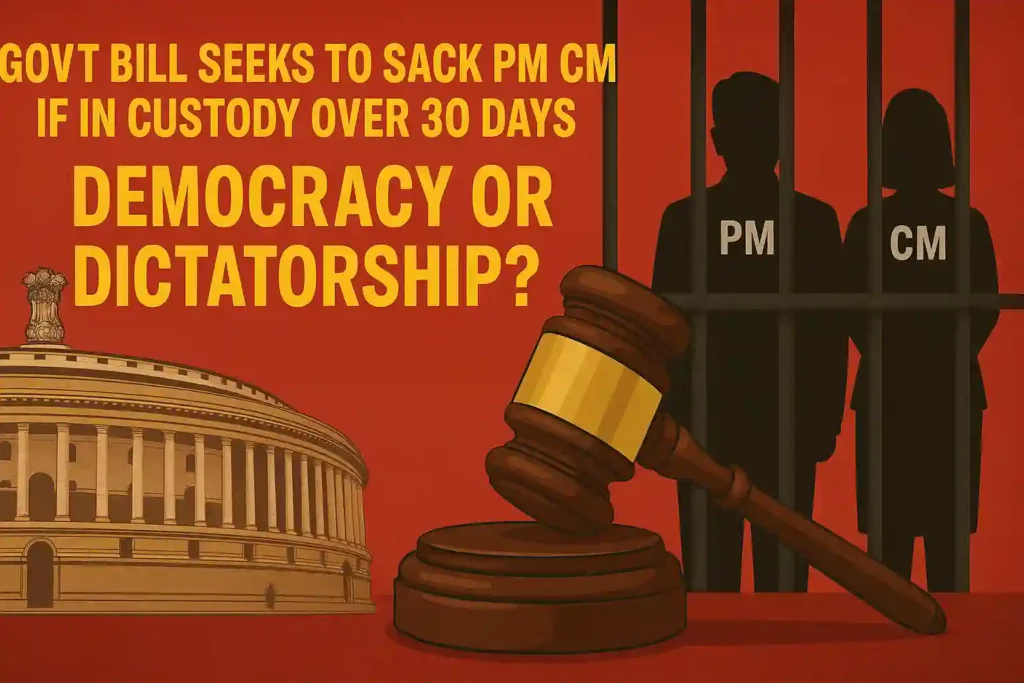
Imagine this: India wakes up one morning to the news that a sitting Chief Minister or even the Prime Minister is behind bars — not convicted yet, just in custody. The new bill that the government wants to push says, in such a case, that leader will have to step down. Thirty days in detention, and boom — their chair is gone.
This is the storm that hit Parliament today, and it’s already splitting the political landscape right down the middle.
What the Bill Proposes
The Centre has introduced a set of constitutional amendment bills that say:
- If the Prime Minister, a Chief Minister, or any minister is held in custody for 30 days or more (on serious charges), they automatically lose their position.
- It doesn’t even wait for a conviction — just being detained long enough triggers removal.
On paper, the idea is being sold as “clean politics.” Leaders facing serious criminal charges shouldn’t continue in power, right? That’s the moral pitch.
Supporters Say It’s Common Sense
Shashi Tharoor, usually the Congress’ intellectual voice, surprised many by calling it “reasonable.” His logic is simple: India’s politics is drowning in criminal cases, and such a law might finally push for a cleaner system. He argued that high offices demand higher accountability, and continuing in power while sitting in jail makes no moral sense.
Opponents Call It Murder of Democracy
But the other side of the story is far darker. Opposition parties, including the Congress leadership, have come out swinging.
K.C. Venugopal blasted the move as a “murder of democracy.” Why? Because detention doesn’t mean guilt. In India’s charged political climate, arrests can be engineered. Think of how many opposition leaders are currently under the radar of central agencies. If this bill becomes law, all it would take is a prolonged custody order to topple a state government.
And here lies the fear: What if this law is misused to bulldoze federalism?
The Legal and Constitutional Angle
This bill pushes into sensitive constitutional territory. Under the current framework:
- Article 75 & 164: Prime Minister and Chief Ministers hold office as long as they have the confidence of the Lok Sabha/Assembly.
- Article 102 & 191: MPs and MLAs are disqualified if convicted for certain offences under the Representation of People’s Act (RPA).
Notice the word: convicted. Not “detained,” not “charged.” Conviction comes after trial, evidence, and judicial process.
This bill shifts that line drastically — from conviction to detention. That means even before guilt is proven, power is snatched away. It’s a radical departure from the presumption of innocence, one of the cornerstones of justice.
The Political Theatre
The reactions tell you how loaded this move is:
- The ruling party pitches it as a reform India desperately needs.
- Opposition parties see it as a tool to destabilize governments — especially in states not aligned with Delhi.
Imagine a scenario: A CM is arrested under some ongoing probe, spends a month in custody, and is automatically removed. Even if later acquitted, the damage is done — their government could collapse in the meantime.
That’s why critics are screaming about authoritarian overreach.
Public Mood: Torn Between Morality and Fear
For the common voter, the story plays like a dilemma.
- On one side, people are tired of leaders with criminal cases. The bill seems like a way to finally put pressure on political parties to choose cleaner candidates.
- On the other, everyone knows how easily arrests can be weaponized. India has seen decades of cases where leaders were jailed for political reasons, not genuine crimes.
So the question lingers: Is this a broom to sweep out corruption or a hammer to crush the opposition?
The Road Ahead
These bills will ignite a fiery debate inside and outside Parliament. Amendments to constitutional provisions need two-thirds majority support in both Houses — not easy to secure unless consensus is built.
Expect a long, messy battle:
- Legal experts will weigh in on whether it violates the basic structure doctrine (judicially protected core principles of the Constitution).
- Political strategists will calculate how this could shift power equations ahead of elections.
- Citizens will be left wondering whether the system is being cleaned or rigged.
Why This Story Matters
This isn’t just another bill. It goes to the heart of democracy: Who decides when a leader loses legitimacy? The courts, the people — or the police?
If it passes, it will be one of the most dramatic changes in India’s political rules since the 42nd Amendment of the Emergency era. If it fails, it will still leave behind a heated national debate on the kind of leaders we want to tolerate.
Either way, India has stepped into one of the boldest — and riskiest — conversations about power, law, and democracy.
🔥 Raw takeaway: This bill is a double-edged sword. It could either be remembered as the clean-up act that forced politics to grow up, or as the trigger that tilted Indian democracy towards authoritarianism. The line between the two? How it’s implemented, and who wields it.
30 दिन हिरासत = कुर्सी ख़त्म? PM/CM हटाने वाले प्रस्तावित बिल की पूरी कहानी—कानून, राजनीति और जोखिम
सोचिए—किसी CM या PM को गंभीर आरोपों में गिरफ़्तार किया गया, जज ने रिमांड/जेल कस्टडी दे दी, और 30 दिन पूरे होते ही कुर्सी चली गई। यही धक्का देने वाला आइडिया सरकार संवैधानिक संशोधन के ज़रिए लाना चाहती है: यदि PM/CM/मंत्री 30 दिनों से अधिक हिरासत में रहें, तो पद से हटना होगा। समर्थक इसे “क्लीन पॉलिटिक्स” कह रहे हैं, विरोधी इसे “लोकोत्सर्जक हथियार” बता रहे हैं।
बिल क्या कहता है (सरल भाषा में)
- लक्षित पद: प्रधानमंत्री, मुख्यमंत्री और मंत्री (केंद्र/राज्य)।
- ट्रिगर: अदालत/कानून के आदेश से लगातार 30+ दिन की हिरासत (गंभीर अपराध, जिनमें कठोर सज़ा सम्भव)।
- नतीजा: पद से स्वतः हटना—बिना सज़ा (conviction) के भी, केवल लंबी कस्टडी के आधार पर।
- री-एंट्री: रिहाई/बरी होने पर दोबारा नियुक्ति की संभावना—पर तब तक राजनीतिक नुक़सान हो चुका होगा।
समर्थकों की दलील: “उच्च पद = उच्च जवाबदेही”
- नैतिकता: जो व्यक्ति जेल में है, वह सार्वजनिक पद पर कैसे बना रहे?
- संदेश: पार्टियों पर दबाव—आपराधिक मामलों वाले चेहरों को टिकट/मंत्रालय देने से पहले सोचें।
- प्रशासन: हिरासत में रहते हुए शासन चलाना व्यवहारतः असंभव—इसका स्पष्ट नियम होना चाहिए।
विरोधियों का सवाल: “हिरासत ≠ गिरफ़्तारी ≠ दोष सिद्धि”
- ग़लतफ़हमी न रहे: हिरासत (custody) = अदालत/जांच के कारण व्यक्ति बंद है; यह सज़ा नहीं।
- दुरुपयोग का ख़तरा: लंबी कस्टडी करवा कर सरकार गिराना/CM बदलना संभव—ख़ासकर अगर एजेंसियाँ राजनीतिक प्रभाव में हों।
- लोकतांत्रिक आशंका: जनता से चुने नेता की कुर्सी ट्रायल से पहले ही चली जाए—निर्दोषता की धारणा (Presumption of Innocence) को चोट।
संवैधानिक बैकड्रॉप: कौन-से Articles दांव पर हैं
- Article 75 (केंद्र) और Article 164 (राज्य): PM/CM और मंत्रिपरिषद का ढाँचा—पद पर बने रहने का राजनीतिक आधार “बहुमत का विश्वास” है, परंपरागत रूप से “प्लीज़र” (President/Governor) भी लिखा है। नया नियम हिरासत-आधारित स्वतः हटाने का कड़ा वैधानिक मानक बना देगा।
- Article 239AA (दिल्ली): NCT of Delhi की विशेष स्थिति—CM/मंत्रियों पर प्रभाव; संशोधन यहाँ भी अपेक्षित।
- Articles 102/191: MPs/MLAs के अयोग्यता मानदंड (Representation of the People Act—RPA, 1951 से लिंक)। अभी की स्थिति: दोष सिद्धि (ख़ासतौर पर दो साल या उससे अधिक की सज़ा) पर सदस्यता जाती है; Lily Thomas (2013) ने सज़ा के बाद बचाव का पुराना रास्ता (RPA 8(4)) ख़त्म किया। नया प्रस्ताव “दोष सिद्धि नहीं, हिरासत” पर पद से हटाने की बात करता है—यह बड़ा शिफ्ट है।
- Article 368: संवैधानिक संशोधन का रास्ता—दोनों सदनों में 2/3 बहुमत। और क्योंकि यह राज्यों के कार्यपालिका ढाँचे (Art.164) को प्रभावित करता है, आम तौर पर आधे से अधिक राज्यों की मंज़ूरी (ratification) भी लगेगी। यह आसान नहीं है।
मौलिक अधिकारों व “बेसिक स्ट्रक्चर” की कसौटी
- Article 14 (बराबरी/अविवेक-विरोध): क्या 30 दिन का फिक्स्ड नियम तर्कसंगत/समुचित वर्गीकरण है? मनमानी (arbitrariness) का आरोप लग सकता है।
- Article 21 (जीवन/व्यक्तिगत स्वतंत्रता): मानेका गांधी जजमेंट के बाद “न्यायोचित, उचित, तर्कसंगत प्रक्रिया” का मानक; ट्रायल से पहले पद-वंचन पर अदालतें पूछेंगी—क्या यह प्रक्रियात्मक न्याय है?
- Basic Structure Doctrine: न्यायपालिका की स्वतंत्रता, संघीय ढांचा, लोकतांत्रिक मूल—यदि संशोधन इन मूल तत्वों को आघात करता दिखा, तो सुप्रीम कोर्ट इसे रोक सकता है।
राजनीति की पिच: किसे फ़ायदा, किसे नुक़सान
- रूलिंग नैरेटिव: “ईमानदारी बनाम अपराध”—जनभावना साथ ला सकता है।
- ओपोजिशन फियर: “मुझ पर केस—लंबी कस्टडी—सरकार गिराओ”—फेडरलिज़्म पर प्रहार का आरोप।
- ग्राउंड रियलिटी: जमानत/कस्टडी पर अदालत की मर्जी; हाई-प्रोफाइल मामलों में 30 दिन पार होना असंभव नहीं। राजनीति का शॉर्ट-टर्म गेम बदल सकता है।
व्यावहारिक सवाल जो हर किसी के दिमाग में हैं
- अगर बाद में बरी हो गया तो?
पद चला जाएगा, वापस मिल भी सकता है—पर राजनीतिक नुक़सान/सरकार का पतन हो चुका होगा। “उल्टा नुकसान” की आशंका। - कौन-सी हिरासत गिनी जाएगी?
न्यायिक/जेल कस्टडी पर ज़ोर—परिभाषा/ड्राफ्टिंग बहुत साफ़ होनी चाहिए, वरना Litigation पक्का। - क्या यह चुनावी हथियार बन सकता है?
लंबी कस्टडी = चेयर ख़त्म—तो “कस्टडी खिंचवाने” की प्रेरणा पैदा होती है। अदालतें फिर सावधान रहेंगी, पर राजनीति का दबाव बढ़ेगा। - क्या राज्यों की मंज़ूरी ज़रूरी?
चूँकि Art.164/239AA में छेड़छाड़ है, राज्य-रतिफ़िकेशन की ज़रूरत पड़ने की पूरी संभावना—यहीं से भारी राजनीति शुरू होगी।
जनता के नज़रिए से: साफ़-सुथरा शासन बनाम दुरुपयोग का डर
लोग सच में क्लीन पॉलिटिक्स चाहते हैं—पर भारत के इतिहास में राजनीतिक गिरफ़्तारियाँ भी हक़ीक़त हैं। इसलिए जनता के मन में दो भाव साथ-साथ:
- “अच्छा है—जेल में बैठे लोग शासन न चलाएँ।”
- “ख़तरा है—बिना सज़ा के कुर्सी कैसे छिन जाए?”
आगे क्या?
- संसद में संख्या-गणित सबसे बड़ा फैक्टर; दो-तिहाई + राज्यों की मुहर—लंबी लड़ाई।
- पास हुआ तो तुरंत SC में चैलेंज—14/21/Basic Structure पर बहस।
- फेल हुआ तो भी—भारत ने जवाबदेही बनाम दुरुपयोग पर एक जरूरी राष्ट्रीय बहस छेड़ दी है।
आख़िरी लाइन (क्लियर, सीधी, शेयर-लायक)
यह बिल दोधारी तलवार है—या तो राजनीति को सच में संजीदगी सिखाएगा, या फिर लोकतंत्र की नसों पर बेमिसाल दबाव बना देगा। फ़ैसला क़ानूनी ड्राफ्टिंग, न्यायिक कसौटी और सबसे बढ़कर—इसे कौन, कैसे इस्तेमाल करता है, इस पर टिका है।
