
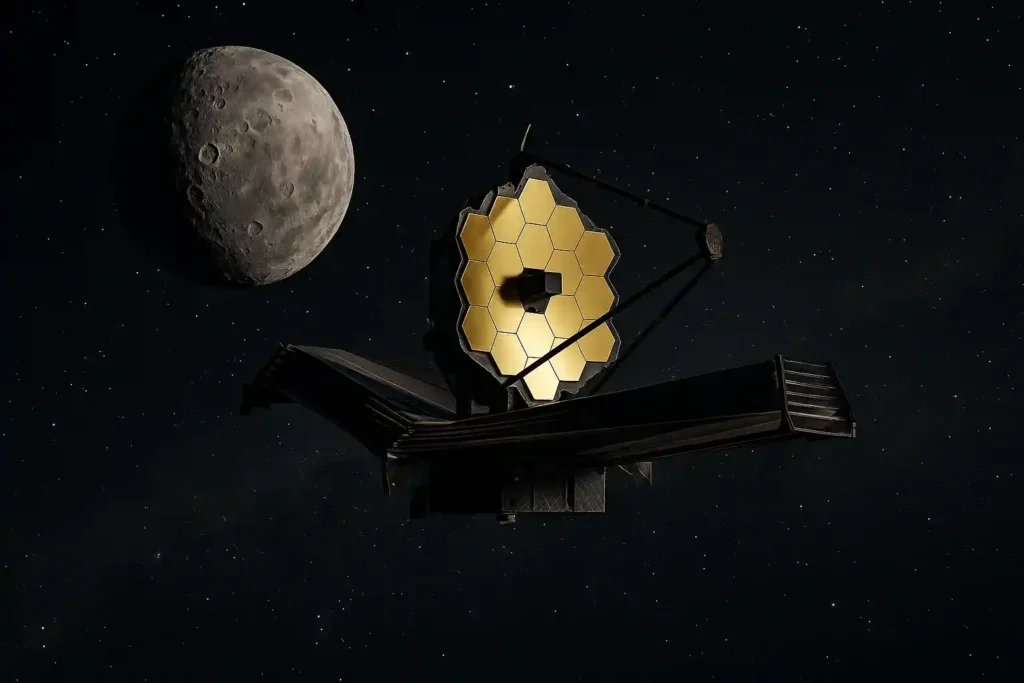
Imagine looking at Uranus — the icy giant sitting 2.9 billion km away — and realizing, “Wait, there’s something else circling it!” That’s exactly what NASA’s James Webb Space Telescope has just pulled off. Astronomers have officially confirmed the discovery of a brand-new moon, now tagged S/2025 U 1, quietly orbiting Uranus.
This isn’t some giant world like Titan or Ganymede. Nope. This one is small — just about 10 km across, roughly the size of a modest city. Still, for scientists, it’s a massive deal. Why? Because every new moon gives us clues about how planets formed, how gravity stitched together the solar system, and even what secrets might be hiding in the cold, dark outskirts beyond Saturn.
🌌 Why Uranus?
Let’s be honest — Uranus rarely makes headlines unless someone’s cracking a joke about its name. But this discovery reminds us how much we still don’t know about this blue-green ice giant. Uranus already had 27 known moons, with the big ones like Titania, Oberon, and Miranda stealing the spotlight. Now, with Webb’s insane infrared vision, number 28 just joined the family.
🔭 The Power of Webb
The James Webb Space Telescope (JWST) has been showing off ever since it launched. From peeking at galaxies formed just after the Big Bang to sniffing atmospheres of exoplanets, it’s been rewriting textbooks almost daily. Spotting a tiny dot orbiting Uranus from billions of kilometers away? That’s like finding a pebble on a dark beach from across the ocean.
🚀 Why It Matters
- New piece of the puzzle: Moons often tell stories about planetary history — collisions, captures, and the birth of the solar system.
- Tech flex: This is Webb proving once again it’s worth every penny of that $10 billion budget.
- Global curiosity: From students prepping for science exams to space nerds daydreaming about alien life, this discovery sparks imagination everywhere.
⚡ The Big Picture
Scientists believe there could still be more tiny moons hiding around Uranus, waiting to be discovered. This is just the start. Each one adds to our understanding of how chaotic and beautiful the early solar system really was.
So, next time someone says Uranus is boring, you’ve got a reply ready: “Oh really? It just got a brand-new moon — what did your planet do today?”
नासा के वेब टेलीस्कोप ने खोजा यूरेनस का नया चाँद – अंतरिक्ष हुआ और भी दिलचस्प
सोचिए, धरती से अरबों किलोमीटर दूर बैठे यूरेनस को देख रहे हों और अचानक पता चले कि उसके चारों ओर एक नया साथी चक्कर लगा रहा है। यही कमाल किया है नासा के जेम्स वेब स्पेस टेलीस्कोप (JWST) ने। वैज्ञानिकों ने पुष्टि की है कि यूरेनस के पास अब एक और नया चाँद मिल गया है, जिसका नाम रखा गया है S/2025 U 1।
ये कोई विशाल ग्रह जैसा नहीं है, बल्कि एक छोटा-सा चाँद है — करीब 10 किलोमीटर चौड़ा, यानी किसी छोटे शहर जितना। लेकिन वैज्ञानिकों के लिए ये बहुत बड़ी खोज है। क्यों? क्योंकि हर नया चाँद हमें सौर मंडल की कहानी समझने में मदद करता है — कैसे ग्रह बने, कैसे गुरुत्वाकर्षण ने सबको बाँधा और अभी भी कौन-सी गुत्थियाँ अनसुलझी हैं।
🌌 यूरेनस पर ध्यान क्यों?
सच कहें तो, यूरेनस अक्सर खबरों में नहीं आता। लेकिन इस खोज ने दिखा दिया कि इस नीले-हरे बर्फीले ग्रह में अब भी कई राज छुपे हैं। पहले से ही इसके 27 चाँद थे, जिनमें टिटानिया, ओबेरोन और मिरांडा सबसे बड़े हैं। अब यह नया सदस्य जुड़कर संख्या 28 कर गया।
🔭 वेब टेलीस्कोप की ताक़त
जेम्स वेब स्पेस टेलीस्कोप अपनी लॉन्चिंग के बाद से ही कमाल कर रहा है। कभी अरबों साल पुराने आकाशगंगाओं को दिखाता है तो कभी दूसरे ग्रहों के वातावरण की जाँच करता है। और अब, अरबों किलोमीटर दूर से यूरेनस के पास एक छोटे से बिंदु को देख लेना? यह ऐसा है जैसे अंधेरे समुद्र किनारे पर पड़ा कंकड़ किसी और महाद्वीप से देख लेना।
🚀 क्यों है यह बड़ी बात
- नई कड़ी मिली: हर चाँद हमें ग्रहों के इतिहास के बारे में कुछ बताता है।
- तकनीकी चमत्कार: JWST ने फिर साबित कर दिया कि 10 अरब डॉलर खर्च करना सही था।
- जिज्ञासा का ईंधन: विद्यार्थी हों, वैज्ञानिक हों या आम लोग — यह खोज सभी के लिए रोमांचक है।
⚡ बड़ा नज़रिया
वैज्ञानिकों का मानना है कि यूरेनस के चारों ओर और भी छोटे-छोटे चाँद छुपे हो सकते हैं, जो आगे खोजे जाएँगे। यह तो बस शुरुआत है। हर खोज हमें बताती है कि सौर मंडल की असली कहानी कितनी जटिल और खूबसूरत है।
तो अगली बार जब कोई कहे कि यूरेनस उबाऊ है, आप कह सकते हैं — “सच में? अभी-अभी वहाँ नया चाँद मिला है। तुम्हारे ग्रह ने आज क्या किया?”
